
Technology services firms have historically built their economics around labor-based delivery models. Teams are staffed, hours are billed, and margins are generated from the difference between client rates and the fully loaded cost of delivery personnel. As a result, revenue and costs tend to increase in parallel, with growth closely tied to expanding human capacity and headcount.
In a traditional services business, revenue can grow substantially, but delivery costs typically follow a similar trajectory. Margins expand gradually because incremental revenue generally requires additional human capacity. This limited separation between revenue and costs has contributed to the valuation gap between services and software businesses, as the cost structure places a natural constraint on operating leverage even when revenue growth remains strong.
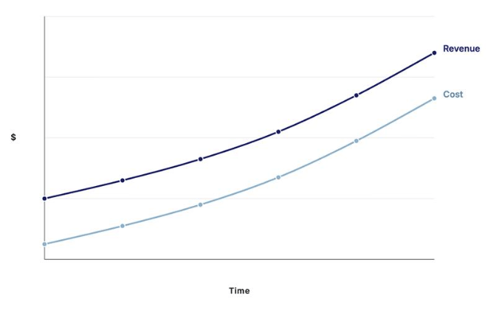
“Agentifying” a service can change this relationship. When software agents assume a meaningful portion of delivery activities, capacity can expand without a proportional increase in headcount. The same underlying infrastructure can support a larger volume of engagements while incremental costs grow slower than revenue. Key indicators include expanding gross margins, increasing revenue per employee, delivery capacity growing faster than hiring, and a cost structure that becomes less directly tied to revenue growth.
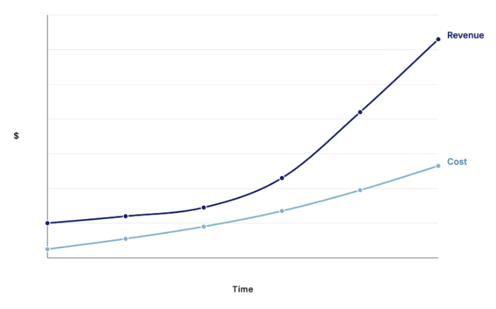
Firms pursuing this transition are not necessarily changing their external offerings. Instead, they are redesigning how delivery operates internally: replacing manual workflows with agent-based processes, moving quality review toward automated evaluation, and building proprietary operational data that can improve agent performance over time. The client experience may remain similar, while the underlying delivery economics change significantly. We previously explored how these dynamics are reshaping pricing models in technology services (https://elaxtra.com/insights/pricing-services-from-time-to-outcomes).
The services industry has historically traded at a discount to software because its underlying unit economics have remained structurally different. Agentification can narrow that gap by enabling services firms to achieve greater operating leverage. Firms that successfully redesign their delivery models may therefore combine revenue growth with expanding margins, creating a financial profile more closely aligned with software-oriented businesses.
Elaxtra Advisors is an M&A and value-creation advisory firm that assists institutional investors, private equity-owned platforms, and strategic acquirers invest and create value in worldwide technology services companies. Please contact us to explore potential partnerships.